
Soil management is becoming increasingly important – and it’s not only for environmental reasons. Technically robust soil remediation strategies also help control costs in construction – especially on brownfield and contaminated land projects.
From April, further increases in Landfill Tax will increase costs on developers, contractors and environmental consultants. For projects involving hazardous or contaminated soils, the financial and regulatory implications are becoming too significant to ignore.
Despite the ease and simplicity that ‘dig and dump’ solutions offer – particularly on smaller developments – clear, innovative and cost-efficient soil remediation strategies can help ease the burden of cost.
The Landfill Tax rate increases are undoubtedly helpful in reducing waste. But they come at a difficult time for the construction industry as it faces steep cost pressures across the sector.
According to the latest forecast from the Building Cost Information Service, there is likely to be an increase of 15% in construction costs by 2030. And that’s without adding any inflationary pressures from unrest in the Middle East.
There are alternatives to dig and dump, something ATG Group has offered for many years, which includes our LockedIn® soil solution. But it is only in recent years that innovative soil treatment solutions have become a preferable alternative to the quick but expensive ‘dig and dump’ route.
Landfill Tax Rates from April 2026
From 1 April 2026, UK Landfill Tax will increase to:
- £130.75 per tonne (standard rate) – applicable to active and hazardous waste streams
- £8.65 per tonne (lower rate) – applicable to qualifying inert materials
While the annual uplift may appear modest, the cumulative increase over recent years has been substantial. The standard rate has more than doubled over the past decade, meaning increasing costs for earthworks and site preparation.
For contaminated land projects, where disposal volumes can exceed tens of thousands of tonnes, Landfill Tax is now a primary cost driver.
Cost implications for construction and brownfield development
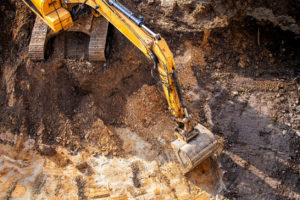
The financial impact of Landfill Tax has the potential to severely impact projects involving excavation of contaminated or hazardous soils. These materials typically fall within the standard rate band and are subject to additional costs, including waste classification, transport, treatment and disposal gate fees.
In practical terms, a site generating 10,000 tonnes of hazardous soil waste could now face landfill tax liabilities exceeding £1.3 million…and that is before haulage and disposal charges are applied.
This has several direct implications for the construction industry:
- Increased project baseline costs
Landfill Tax is now embedded within early-stage feasibility assessments. Projects that rely heavily on off-site disposal are becoming progressively less viable, particularly in competitive tender environments. - Greater emphasis on waste classification and compliance
Accurate characterisation of soils under WM3 guidance is critical. Misclassification between inert, non-hazardous and hazardous waste streams can result in significant financial exposure, regulatory penalties, and retrospective tax liabilities. - Margin risk and cost uncertainty
Unexpected ground conditions remain one of the highest-risk elements in construction. With Landfill Tax at current levels, any deviation from initial site investigation assumptions can have disproportionate cost consequences.
Hazardous soil disposal challenge
Hazardous soils present a specific challenge due to both their regulatory classification and limited disposal routes. These materials often require specialist landfill facilities, increasing haulage distances and logistical complexity.
As landfill capacity tightens and regulatory scrutiny increases, reliance on disposal-led strategies introduces programme risk alongside escalating costs. This is particularly relevant for urban brownfield sites, where contamination profiles are variable and often poorly defined at early stages.
The result is a delivery model that is increasingly exposed to volatility in both pricing and programme.
The role of soil management and remediation
Rising Landfill Tax is not simply a cost issue; it is a structural driver of change within the industry.
Remediation-led strategies that prioritise treatment, reuse and recovery of soils rather than disposal are becoming increasingly important. And while some developers are keen to focus on such approaches, time and cost pressures often influence thinking.
But with Landfill Tax costs rising, soil management and remediation is becoming more advantageous.
From a technical perspective, modern soil remediation techniques can include:
- Physical separation and screening
- Stabilisation and solidification
- Bioremediation and chemical treatment
- In-situ or ex-situ treatment systems
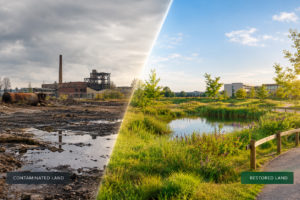
By reducing contaminant concentrations or altering the physical characteristics of soils, these methods can enable reclassification and reuse either on-site or within the wider development.
Reduce costs through waste diversion
The most effective way to mitigate Landfill Tax exposure is to reduce the volume of material classified as waste in the first place.
Diverting soils from landfill through remediation can significantly reduce overall project costs when considering the combined impact of tax, transport and disposal fees. In many cases, the cost of treatment – such as our LockedIn® soil stabilisation process – is lower than the total cost of disposal, particularly for large-volume sites.
In addition to direct cost savings, remediation-led strategies can:
- Reduce vehicle movements and associated carbon emissions
- Improve programme certainty by minimising reliance on third-party disposal facilities
- Enhance sustainability performance and planning compliance
These factors are increasingly important in both public and private sector developments, where environmental performance is closely scrutinised.
Early-stage soil management strategies
April’s Landfill Tax increase reinforces the need to integrate waste strategy into early-stage project planning. Decisions made at feasibility and design stages – particularly around site investigation scope and remediation strategy – now have a direct and material impact on project viability.
For consultants, this requires a more detailed understanding of both waste classification and treatment options. For contractors and developers, it necessitates closer collaboration with remediation specialists to identify opportunities for on-site reuse and cost reduction.
Ultimately, landfill should be considered a last resort rather than a default solution.
A catalyst for change
The Landfill Tax increase is fundamentally changing the economics of contaminated land development.
For projects involving hazardous soils, the traditional reliance on excavation and disposal is becoming increasingly unsustainable. Prioritising soil treatment for reuse and reducing waste not only controls cost it will deliver sustainable developments. And that has to be positive as it increases the potential of many difficult brownfield sites.
If you would like more details about ATG Group’s soil remediation services, which has been developed over two decades, contact us today.