
What happens when yesterday’s waste becomes tomorrow’s environmental problem?
This is a question that needs to be answered in light of last night’s BBC Two documentary ‘Buried with Michael Sheen’. The programme investigated claims surrounding the historic dumping of toxic industrial chemicals across Wales and north-west England.
It looked at allegations around polychlorinated biphenyls (PCBs). These chemicals were once widely used because of their stability and resistance to breaking down.
PCBs were used in a vast array of industrial and commercial ways, including:
- Electrical, heat transfer and hydraulic equipment.
- Plasticizers in paints, plastics and rubber products.
- Pigments, dyes and carbonless copy paper.
But they weren’t confined to use in a commercial setting. Some oil-based paints, old electrical devices and capacitors in fluorescent lights also used PCBs.
Today, PCBs are recognised as highly hazardous persistent pollutants and are banned globally.
For the communities living near these historic sites, the story is not one of what happened decades ago. It is about what remains today.
And that raises a much bigger question for all of us: Are we doing enough to make sure today’s environmental problems don’t become tomorrow’s legacy?
Contamination doesn’t simply disappear
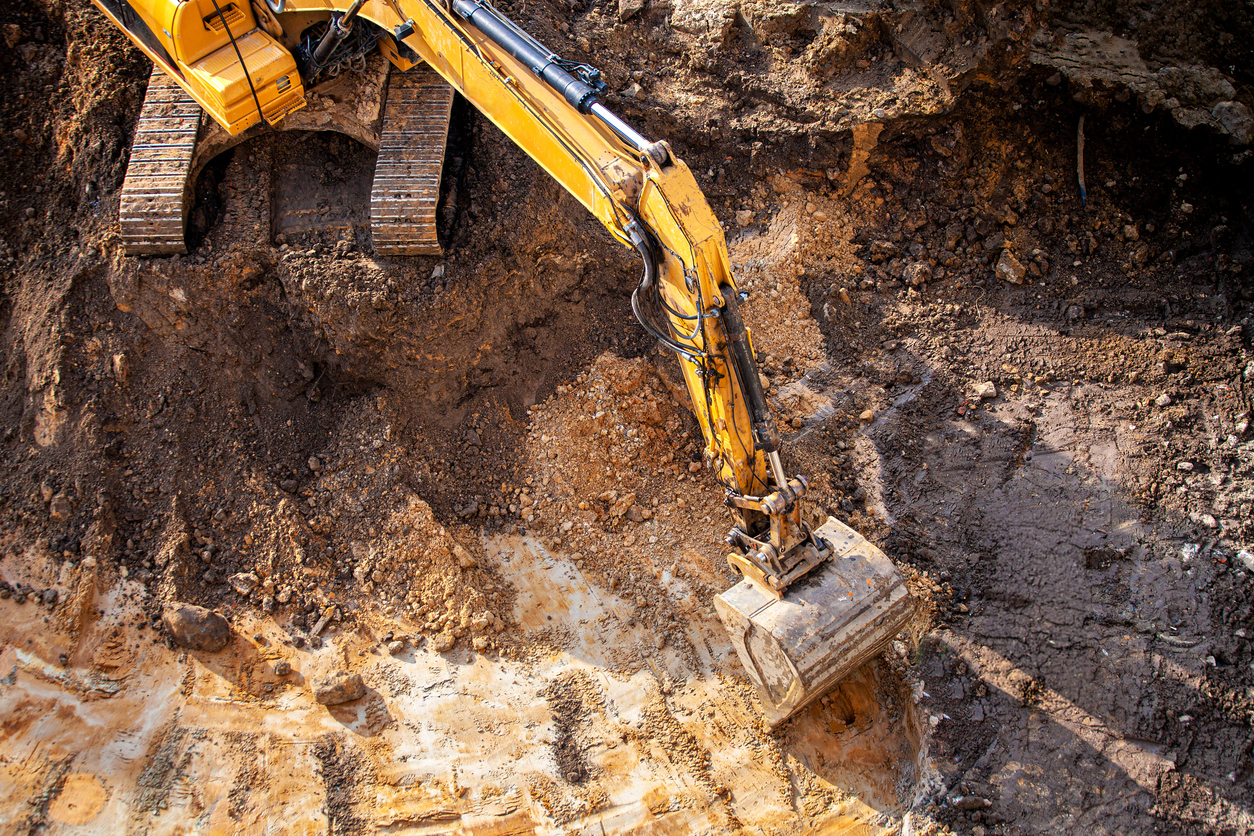
We work with contaminated land every day. And that means we see daily the problems contamination leaves for tomorrow’s generations.
The team at ATG Group sees the challenges associated with land that has been used for industry, manufacturing, waste management and other activities over many decades.
Sometimes the contamination is obvious. But a lot of contaminated materials remains buried beneath the surface.
And increasingly, we are dealing with contaminants that previous generations may never have had the technology, knowledge or regulatory framework to identify.
The challenge of PFAS
One of the clearest examples is PFAS.
Often referred to as ‘forever chemicals’, PFAS are a large family of man-made chemicals that have been used extensively because of their resistance to heat, water and oil.
That same durability creates the environmental challenge.
PFAS are extremely persistent and can remain in the environment for very long periods. They can move through soil and water, making contamination difficult to manage once it has entered the environment. The Environment Agency has described PFAS as a significant environmental challenge to remediate and has identified their persistence as a key concern.
This is an important step in recognising the need to take PFAS contamination seriously. Our innovative approach to contaminants has seen us successfully remediate a number of sites with a legacy of PFAS.
Environmental Audit Select Committee Chair, Toby Perkins MP, made clear that the UK Government is now fully focused on ‘forever chemical’. He revealed this at the PFAS conference we hosted with the National Brownfield Institute in April.
The Government’s first PFAS Plan, published in February 2026, includes action around legacy contamination on contaminated land, alongside improved monitoring and measures to reduce ongoing exposure. The Government is planning on releasing details in 2027.
What this demonstrates is clear: The decisions we make about waste and contamination today can have consequences that last far beyond our own lifetimes.
We shouldn’t simply move the problem
For too long, the traditional approach to waste has often been about getting it out of sight and out of mind.
But contaminated soil is not simply ‘waste’ that ceases to matter when it leaves a construction site. If contaminated material is moved from one location to another without appropriate treatment, the environmental problem may simply be transferred.
That is why we believe the future of contaminated land management has to be about treatment, recovery, responsible management and remediation wherever technically and environmentally appropriate.
The objective should not simply be: Where can we put this?
It should be: What can we do to make this safer?
We have a responsibility to future generations
The story being explored by ‘Buried with Michael Sheen’ is a reminder that environmental decisions can have extraordinarily long lifespans. What may have been considered an acceptable way of dealing with industrial waste decades ago can become a serious environmental, social and financial challenge for communities today.
PFAS is showing us that the same principle applies to contaminants that are still very much part of our modern world.
We have an opportunity to learn from the past. We shouldn’t wait another 20, 30 or 50 years to discover that today’s waste-management decisions have created tomorrow’s contamination problems.
The questions we need to ask are:
- Where are potentially hazardous materials going?
- What happens to contaminated soils after they leave a development site?
- Can they be treated rather than simply disposed of?
- Are we properly considering emerging contaminants?
And, most importantly:
- Are we solving the problem – or simply passing it on?
What can we do?
There is no single solution to legacy contamination. It requires collaboration between communities, landowners, developers, consultants, contractors, regulators, scientists and specialist remediation companies.
But there are practical things we can do:
- Improve investigation and understanding of contaminated sites.
- Identify emerging contaminants earlier.
- Invest in remediation technologies that remove, treat or manage contamination responsibly.
- Reduce our reliance on simply sending contaminated material to landfill where better options exist.
And we can make sure environmental considerations are built into development and infrastructure projects from the beginning, rather than treated as an issue to resolve at the end.
Let’s start a conversation
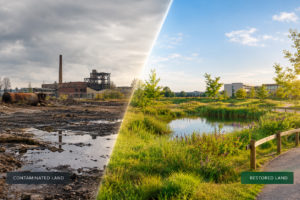
ATG Group is building its mission around restoring land and creating a better future for the communities that depend upon it.
We believe contaminated land should not automatically be viewed as a problem to hide, move or leave for someone else.
It should be an opportunity to do something better. And s Buried with Michael Sheen brings the issue of historic chemical contamination into the national conversation, we think it is time to ask a wider question:
What are we doing today to make sure we don’t leave the next generation with the environmental problems we could have solved ourselves?
At ATG Group, we believe the answer should be simple:
Don’t bury the problem. Remediate it.
Restore the land. Protect the future.
This article discusses issues raised by the documentary and wider environmental challenges. Allegations concerning specific historic sites and organisations should not be taken as established fact unless independently verified.