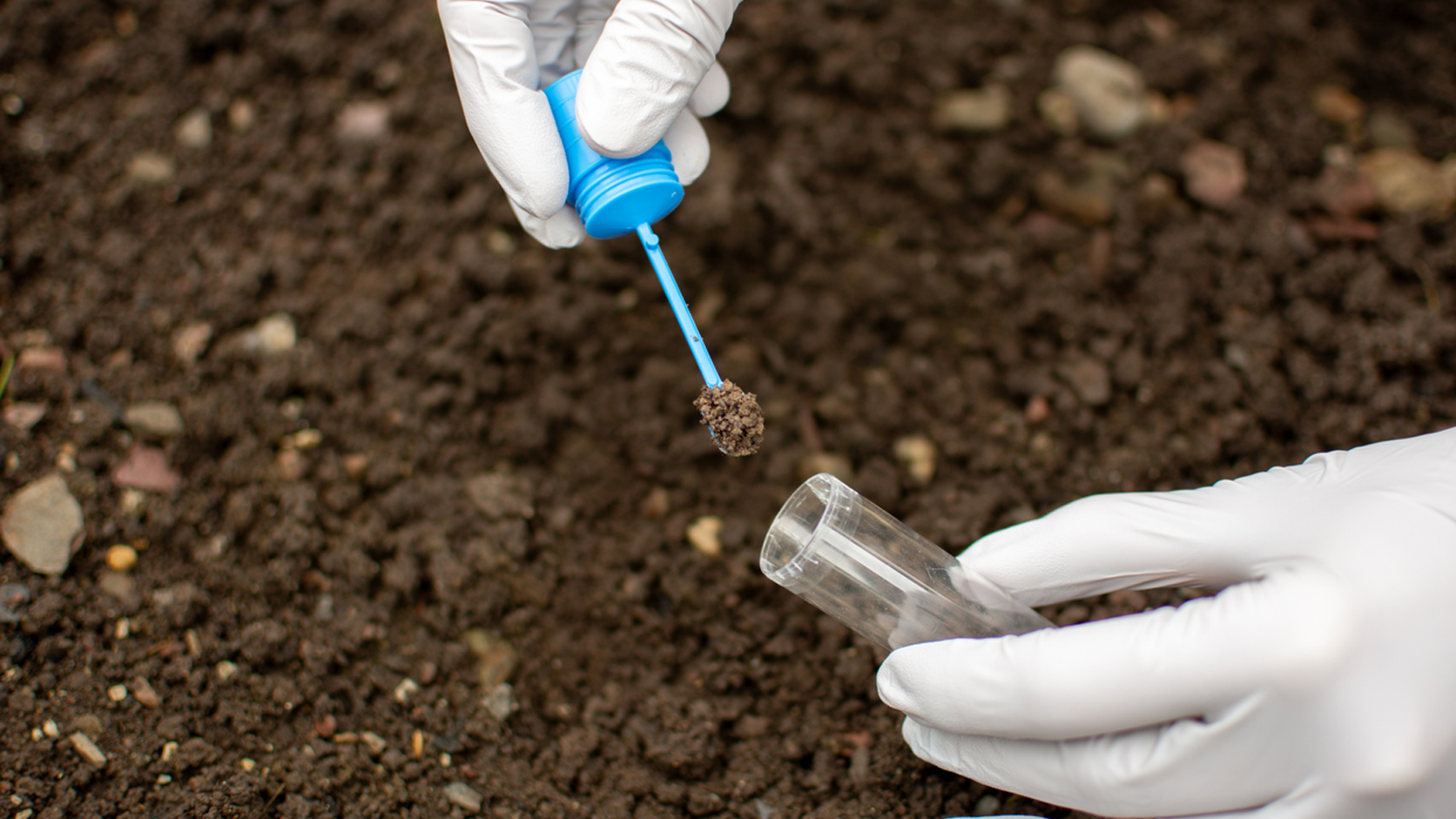
For decades, we’ve been investigating contaminated land, identifying pollutants and finding ways to manage the risks they pose. But what happens when the contaminants we’re looking for aren’t necessarily the only ones we should be concerned about?
It’s a question becoming increasingly relevant as our understanding of emerging contaminants continues to develop.
Historically, contaminated land investigations have focused on well-established pollutants such as hydrocarbons, heavy metals, asbestos and certain industrial chemicals. These remain important concerns, particularly on former industrial sites.
But there is a growing awareness that some substances previously overlooked, or not routinely investigated, may also present environmental and human health risks.
PFAS are a particularly interesting example. The problem with what we don’t know
Per- and polyfluoroalkyl substances (PFAS) are a large group of manufactured chemicals that have been used in numerous industrial and consumer applications, including firefighting foams, surface treatments and manufacturing processes.
Their resistance to degradation has made them useful in many applications. However, that same persistence presents significant environmental challenges.
Some PFAS can remain in soil and water for prolonged periods, while certain substances are associated with adverse health effects.
As awareness has increased, so too has the need to understand where PFAS may be present, how they behave and what risks they pose.
But here’s the challenge… PFAS Legacy Contamination
If a contaminant isn’t included in the scope of a site investigation, how can we know whether it represents a problem?
That doesn’t mean every site should automatically undergo extensive PFAS testing. The established LCRM methodology for managing contaminated land risks clearly shows that investigations should be proportionate and informed by the site’s history, potential sources of contamination, environmental setting and intended use.
However, it does mean we should continually question whether our understanding of a site’s potential contamination is sufficiently comprehensive.
Are yesterday’s investigations answering today’s questions? Consider a former industrial site that was investigated many years ago.
At the time, the investigation may have been entirely appropriate, following the guidance, analytical capabilities and scientific understanding available.
But what if that same site were investigated today?
Would the scope be identical? Would the same contaminants be considered? Would advances in analytical techniques or our understanding of environmental risks lead to different questions?
Not necessarily in every case. But it is entirely possible that an updated assessment could identify potential risks that were not previously considered.
This is particularly relevant as the UK continues to develop its understanding of PFAS contamination and the appropriate approaches to assessing and managing it.
And one possible solution
We have been working with lawyers and insurers where this very problem of ‘PFAS legacy contamination’ is raising its head for a number of their industrial clients.
The PFAS Risk Intelligence Platform (PRIP) ATG Group has built with more than 5 million PFAS datapoints across the UK, can really help here by providing background PFAS concentrations, outline remediation cost estimates and a semi quantitative risk ranking score at site specific locations or for a portfolio of sites.
Finding contamination is only part of challenge
For developers, landowners and environmental consultants, the implications are important.
Discovering previously unrecognised contamination late in a development programme can introduce uncertainty, require further investigation and potentially affect remediation strategies, costs and timescales.
Early consideration of emerging contaminants, where the site’s history indicates a credible risk, could help avoid some of those challenges.
Finding contamination is only part of the challenge. Identifying a contaminant is one thing. Understanding how to manage it effectively is another.
PFAS present particular technical challenges because they are a family of many chemical substances that can behave differently in soil and water. Their mobility, persistence and response to treatment vary.
There is no single remediation approach suitable for every PFAS affected site and we work with clients and their consultants/main contractors to design a practical, cost-effective solution often combining a series of technologies.
The appropriate strategy depends on factors including the contaminants present, their concentrations, the affected media, exposure pathways regulatory requirements and the long-term objectives of the project.
This makes early assessment, appropriate investigation and careful consideration of remediation options particularly important.
At ATG Group, we believe sustainable land remediation must be based on understanding the contamination challenge rather than simply applying a familiar solution.
That means considering not only how contamination can be managed, but also the wider environmental implications of the chosen approach.
What will we be looking for in another 20 years?
PFAS are unlikely to be the last group of substances to challenge established approaches to environmental assessment.
Scientific knowledge will continue to develop. Analytical techniques will improve. Our understanding of the environmental behaviour and potential effects of different chemicals will evolve.
And substances that attract relatively little attention today may become more significant considerations in future investigations.
That doesn’t mean we should assume every emerging substance represents a major environmental threat.
It does mean that contaminated land management must remain responsive to new evidence.
The challenge for our industry is to balance proportionate, risk-based investigation and remediation with a willingness to question established assumptions.
Because the most important question isn’t always whether we’ve found the contaminants we were expecting.
It’s whether we’ve considered the contaminants we should be looking for in the first place.
We work across the UK, Ireland and Europe, providing sustainable solutions for contaminated land and water, including the assessment and remediation of complex environmental challenges.
To discuss contaminated land, PFAS or sustainable remediation solutions, contact us today.